Description
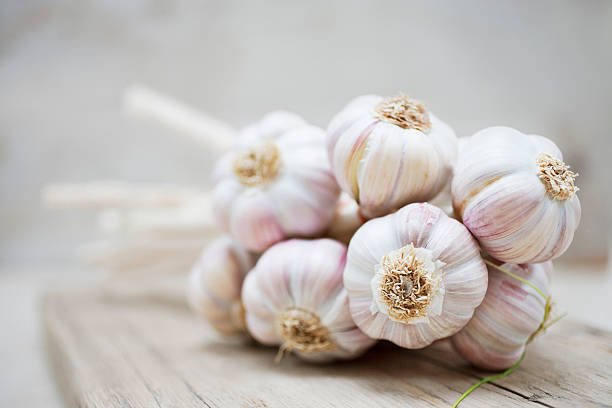
Garlic (Allium sativum) is a bulbous, perennial herbaceous plant belonging to the Amaryllidaceae family, which also includes onions, leeks, and shallots. Native to Central Asia, it is one of the world’s oldest cultivated plants, valued globally for its pungent flavor and extensive history of use in both culinary and traditional medicine.
- Bulb (Head): The most commonly used part of the plant grows underground. It is a compound structure, often roughly fist-sized, and covered in a papery, inedible outer skin that can be white, purple, or striped depending on the variety.
- Cloves: The bulb is naturally divided into numerous smaller, individual sections called cloves (or bulblets), each encased in its own thin, protective skin. There can be anywhere from 4 to over 20 cloves per bulb, which vary in size and shape.
- Leaves and Stalk: The plant produces long, flat, strap-like leaves that are 1–2 feet long. From the center of some varieties (hardneck), a tall, solid, and unbranched flower stalk, known as a scape, emerges, which may produce pink to purple flowers or tiny aerial bulbils.
- Roots: The roots are slender, white, and hairless, extending downward from the basal plate of the bulb.
Reviews
There are no reviews yet.